ORGANISATIONAL CULTURE – A BEGINNING.
“ The stronger the culture, the less corporate process a company needs. When the culture is strong, you can trust everyone to do the right thing. (Chesky, 2014). In the modern era of 21’s centurion business world, consumers seek product satisfaction while CEO’s are behind the profit scale, similarly employees search well established and highly dignified corporate cultures and values. During the early 1980s, corporate cultures became an exclusive fashionable topic in the literature of management. Later, organizational culture was defined by David Needle,2004s as ‘a set of beliefs, behaviors, systems, symbols, and values that an organization holds about itself’ (Quang, 2017). In simpler terms, it is the extent that people share common wishes, desires, and aspirations, they can commit themselves to work together. Cultural values enhanced the performance of the organization consistent with the processes needed to accomplish the mission while adapting internal and external challenges that influenced the organization (Groysberg, 2018).
A BRIEF NOTE ON CULTURE.
The term culture was derived by ‘Tuckler’ from the Latin word ‘Cultura’ meaning ‘to tend’ or ‘to cultivate’ (Berger, 2000) Later, British anthropologist Edward Tyler was widely credited with the first modern definition of culture: “That complex whole which includes knowledge, belief, arts, morals, law, customs, and any other capabilities and habits acquired by man as a member of society.” (Appiah, 2016). Finally, years later Mullins(2005) stated, “The assumptions, beliefs, values, and norms that drive ‘the way we do things around here” (Cancialosi, 2017). Every aspect of the organization is influenced by its culture where the managers tend to adapt and change the organizational strategies, personalities and behaviors in order to benefit the company and achieve organizational goals. (Yukl, 2013)
TYPES OF CULTURE AND “HOFSTEDE’S CULTURAL DIMENSION THEORY.”
The classification of culture is carried out further into two different terms: –
- National culture (citizens following the culture of their nations.)
- Organizational culture (employees, managers and higher authorities following the workplace culture.)
| NATIONAL CULTURE | ORGANIZATIONAL CULTURE |
| Core is focussed on values. | Core is focused on practices. |
| Filled by strong emotions and differences in individual values | Filled by more tangible and reachable practices such as goals and objective setting. |
| Slow changing | Due to tangibility, it is fast changing. |
| Depends on how individual relate to each other based on their values. | Depends on how members of the organization relate to their work, each other and outside the world. |
| Distinguishes individuals from one another. | Distinguishes organizations from one another. |
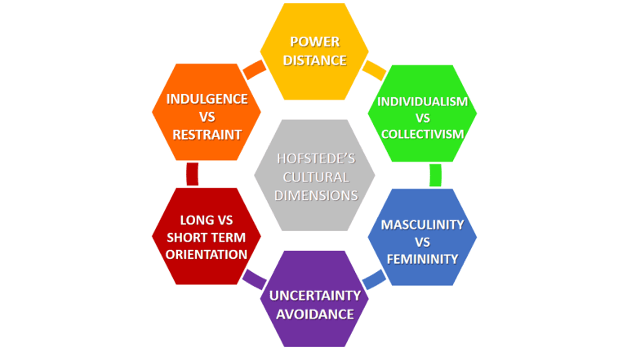
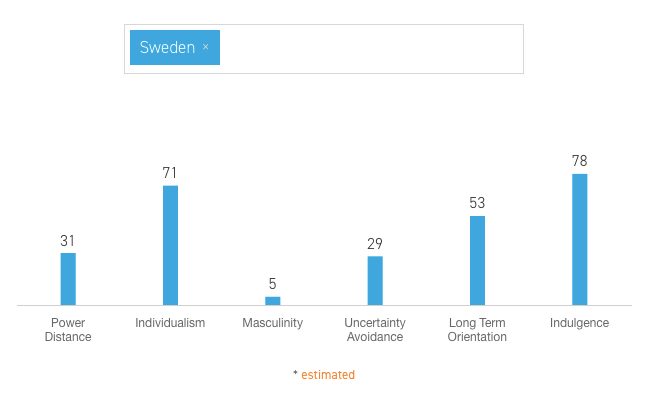
Hofstede’s cultural dimensions theory is a model developed by Geert Hofstede (1976) which signifies cross-cultural leadership values and diversity among society. Hofstede identified four primary dimensions regarding systematic differences of national culture which got published in his book, ‘Culture’s Consequences’. In 2000’s Bulgarian scholar Michael Minkov added two new dimensions in the Hofstede’s theory framework shown in (figure 1) (Hofstede,2020).
CHARLES HANDY’S MODEL AND CLASSIFICATION OF ITS DIFFERENT CULTURES :
Charles Handy in the year 1993 gave its model identifying the four different cultures of an organization which are as below :
POWER CULTURE A culture defined for its dominant central figure that holds the entire or maximum power, also interprets newer leadership styles a leader would. The firms exhibiting such culture possesses fewer rules but well defined set of codes on behaving & working which completely relies on individual and not consensus. | ROLE CULTURE The following culture is highly relied on job description or the procedure of the firms work. Authorities defines what they expect and select employees accordingly. Additionally, the procedures are the guidebook for the people to interact and enable the rules and position of hierarchy enables the power. |
TASK CULTURE The employees are dedicated towards the commencement of their tasks regardless of their formal roles. Valuing each other of their contribution and expectations for joining falls here. They secure the resources and people and combine their diversified skills for a similar goal. | PERSON CULTURE This exhibits a free culture where the individual holded at centre and the system serves him. The type is unusual – less professional, communal and artistic. They also meet the needs of the professionals rather than large goals of the organization. |
COMPARISION OF DIFFERENT DIMENSIONS OF ORGANIZATION CULTURES AMONG FOUR DIFFERENT NATIONS.
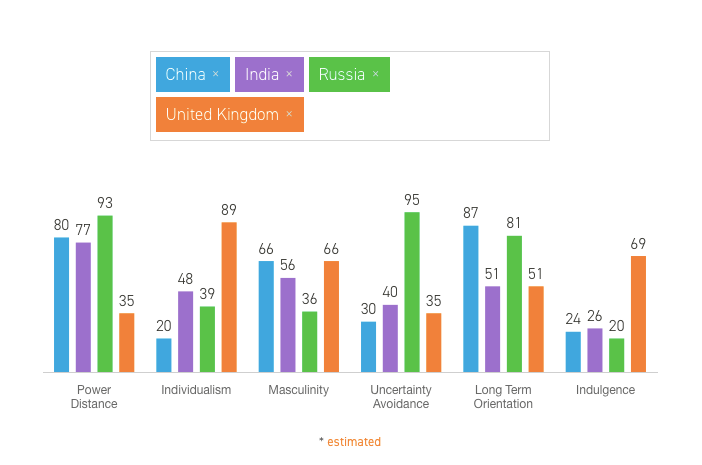
(Source : (Hofstede, 2019)
IKEA : MANAGING CULTURAL DIFFERENCES.
IKEA being the great multinational group of companies along with the world’s largest furniture and charitable organization worldwide, is a very renowned corporation for its reputation. Billionaire Ingvar Kamprad founded this company in 1943 and named it after himself Ingvar Kamprad from Elmtaryd, Agunnaryd. Moving to the culture and values of IKEA, they are following a typical ‘Swedish’ culture of the organization which totally reflects its roots initiating from Smaland, south Sweden. IKEA believes its culture and values are translated from land and people of Sweden who follow a hardworking, helping, down-to-earth and environmentally loving culture. (IKEA, 2019)
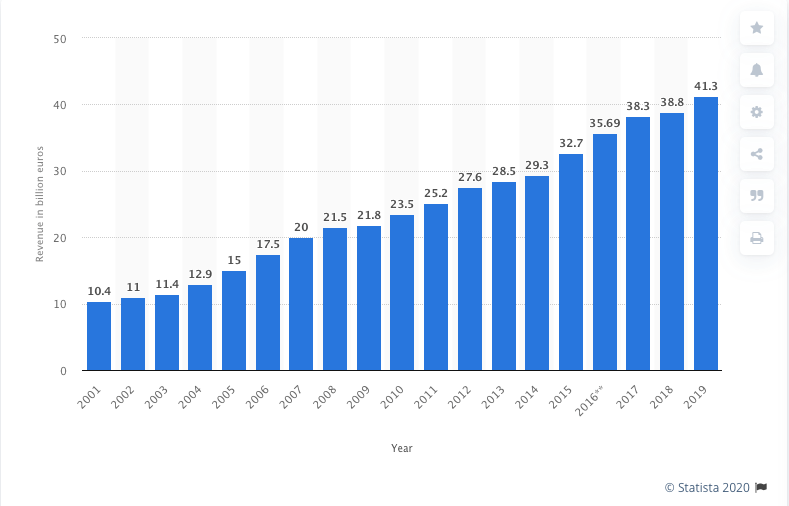
Presently in 2018, the net brand value of IKEA is resulted to be approximately $18.5 billion verified by Forbes. Ingvar Kamprad writes his success mantra for the success of his company IKEA as “ Maintaining a strong IKEA culture is one of the most crucial factors behind the continued success of the IKEA concept.” He strongly agrees with the concept of working together as a team with an organizational equality environment and believes that every individual has something valuable to offer and he strives the same value culture in his organization. (Forbes, 2020)
Rich Cultural Values expirienced by IKEA employees :
IKEA’s CULTURAL ANALYSIS.
News channel operators never forget featuring IKEA on-air screening its organizational values and its unique hierarchical system of culture which implements proper functioning of retail showrooms of IKEA by its employees. NBC TODAY highlighted IKEA’s culture of the organization as playful and full of joy (Capell, 2005). IKEA adopted a flat structure of management by abolishing the layers of hierarchy from it and also got featured for the same. Workers & employees of IKEA started praising for this system of togetherness as a core value because it motivated them in learning new skills every day and the family-like bond between authorities and subordinates proved to be highly successful for the organization. Currently, IKEA is also promoting the elimination of inequality and prioritize positive values of the workplace over the competency as the prime factor for recruitment and promotion. IKEA CEO Peter Agnefjallav promotes gender equality for managerial opportunities and focusses totally on values such as humbleness, simplicity, togetherness, and enthusiasm over competencies. (IKEA, 2020).
According to Hofstede’s theory (1980), IKEA in a unique ‘Swedishness’ culture of values in the organization, tends to have a Low power of distance. Thus, the style of management is seen as informal and the hierarchy is flat. IKEA believes the words of Nygaard & Bengtsson (2002) that the authority arrives from the person’s knowledge and personality rather than its title or status. Therefore, managers of different nationalities at IKEA perform their individual styles of leadership, have informal clothing styles, regularly perform hands-on participation in daily work and meanwhile employees & managers eat and park together in the same place showing the great sign of low power of distance (Salzer,1994). On the other side, IKEA consists of High Individualism. IKEA promotes self-dependency over insularity and therefore the competitive thrust of corporate life and work centrality is not high. Decentralized decision making takes place in this culture. Adding up, Feminity is even a high factor for IKEA multinationals. The soft and feminine values of the culture here in IKEA include freedom and allowance for personal relations, care for others and equality and democracy for everyone. IKEA finds its managers fit perfectly for its feminine culture as they are more intuitive than the firm. Concluding dimension Uncertainty Avoidance is low in this successful organization. Practices & experience counts more in IKEA than principles. IKEA prefers to offer a relaxed and free environment of work for its managers as well as employees. Employees are welcomed for their decisions or suggestions and thus workers find it overwhelmed working and contributing to IKEA. (IKEA, 2020)
CONCLUSION.
All above factors contribute highly to the overall success of IKEA. The everlasting positive climate and the sense of togetherness among employees as well as higher authorities already reflect the strength of IKEA’s organizational culture and also impact how its employees communicate, behave and think. Therefore, this informal culture of the organization with belongingness, freedom, democracy and a high level of trust have proved a magical 77 years of the success story for IKEA and even have been an inspiring chapter for other organizations as well.
REFERENCES.
Jaques, D. E., April, 1951. The Changing Culture of a Factory,. s.l.:s.n.
Yukl, G. A., 2013. Leadership In Organizations. s.l.:Pearson.
Anon., n.d. Business to you. [Online]
Available at: https://www.business-to-you.com/hofstedes-cultural-dimensions/
Chesky, B., 2014. Don’t Fuck Up the Culture. [Online]
Available at: https://medium.com/@bchesky/dont-fuck-up-the-culture-597cde9ee9d4
[Accessed March 2020].
Quang, N. H., 2017. ORGANIZATIONAL CULTURE MODEL OF VIETNAM AIRLINES. INTERNATIONAL JOURNAL OF CURRENT RESEARCH, 31 October, 9(10), pp. 59468-59472.
Groysberg, B., 2018. The Leader’s Guide to Corporate Culture. THE CULTURE FACTOR, February.
Berger, A. A., 2000. The Meanings of Culture. [Online]
Available at: http://journal.media-culture.org.au/0005/meaning.php
[Accessed March 2020].
Appiah, K. A., 2016. There is no such thing as western civilisation. [Online]
Available at: https://www.theguardian.com/world/2016/nov/09/western-civilisation-appiah-reith-lecture
[Accessed March 2020].
Cancialosi, C., 2017. What Is Organizational Culture?. [Online]
Available at: https://gothamculture.com/what-is-organizational-culture-definition/
[Accessed March 2020].
Hofstede, G., 2020. ORGANISATIONAL CULTURE. [Online]
Available at: https://hi.hofstede-insights.com/organisational-culture
[Accessed March 2020].
Boddy, D., 2017. Charles Handy’s cultural types. In: MANAGEMENT – AN INTRODUCTION. Glasgow: Pearson Education Limited, pp. 91-92.
Anon., 2017. Hofstede’s Cultural Dimensions. [Online]
Available at: https://www.business-to-you.com/hofstedes-cultural-dimensions/
[Accessed March 2020].
Hofstede, G., 2019. ORGANISATIONAL CULTURE. [Online]
Available at: https://www.hofstede-insights.com
[Accessed March 2020].
IKEA, 2020. IKEA. [Online]
Available at: https://www.ikea.com
[Accessed March 2020].
IKEA, 2019. IKEA history – how it all began. [Online]
Available at: https://www.ikea.com/ms/en_JP/about_ikea/the_ikea_way/history/index.html
[Accessed March 2020].
Forbes, 2020. IKEA. [Online]
Available at: https://www.forbes.com/companies/ikea/#1dc1e0d12ad0
[Accessed March 2020].
IKEA, 2020. Culture & Values. [Online]
Available at: https://www.ikea.com/in/en/this-is-ikea/culture-and-values-pubd0e72f31
[Accessed March 2020].
Capell, K., 2005. Understanding IKEA. Bloomberg Businessweek, 11 August.
O’Connell, L., 2019. IKEA revenue 2001-2019. [Online]
Available at: https://www.statista.com/statistics/264433/annual-sales-of-ikea-worldwide/
[Accessed March 2020].
 Aman's Leadership Blog
Dear Aman, you showed a very detailed approach of the study on the organization cultures and also diversified various theories and later implemented on the great multinational IKEA. Apart from Hofstede & Charles Handy’s model , can you also briefly show your approach on Deal & Kennedy’s cultural model and how a MNC like IKEA exhibits the same culture among its organization ?
LikeLike
A heartily thanks for the appreciation Rutvi Raghani. IKEA exhibits one of the leading market industry for furniture and homeware department. Along with the cost effective strategy, IKEA also wonderfully performs a complete flat management structure which is globally accepted by many such more industries. Also, work culture of employees is free, joyful and motivating resulting the best success rate in the performance styles by the IKEA employees which inturn benefits the production and sales of the company.
Further, as you asked for, apart from these two organizational model I have even studied on DEAL & KENNEDY MODEL which is also a diversified approach of classifying cultures. “Corporate Cultures: The Rites and Rituals of Corporate Life,” is the book where Deal and Kennedy proposed its model for the first time in 1982 and diversified cultures into 4 types :
a) Work hard/ Play hard : employees take few risks & recieve immediate feedback.
b) Tough guy/ Macho : enjoys risk with quicker feedback on the decisions.
c) Process : slow feedback with lesser risks.
d) Bet-your-company : high risked decisions which takes years to see weather the risks actually pay off.
on the basis of- The degree of risk associated with a company’s key activities & the speed at which companies learn whether their actions and strategies are successful.
Therefore, as we studied above how IKEA possesses its organizational culture which is called ‘ swedishness’ in its culture ( free, open, flat structure) IKEA company exhibits the work hard/play hard culture among the deal & kennedy orgnizational culture model due to its world of sales attitude due to which the employees take very limited risks and also get the immediate outcome of feedback from it. This causes the realization that one person alone cannot make the company. Thus, it has also worked as an effective version of success for IKEA.
IKEA do face internal issues in the organization among the employees but the rate is low and thus it has enabled a good success for IKEA.
I hope i have made your doubt clear how IKEA is responsible for its organization cultures’s success.
LikeLike
Hey Aman,
That was a wonderful blog you have written.
You have put some strong points which is commendable.
I just have one question that is how should be an ideal workplace or ideal organisational culture should look like?
LikeLike
Hey Roohi, thankyou much for showing a keen interest towards my blog on managing organizational culture. I liked your question as it has became a question for almost all the organizations and MNC’s who are exhibiting different cultures among its workplace.
In this 21st century world where everyday you get to know some different organizational problems among employees or higher authorities based on culture, defining an ideal organizational culture becomes a difficult task to elaborate but i will surely demonstrate my view. In my perspective, the workplace should not be something that people dread every day. Employees should look forward to going to their jobs. While the work may be difficult, the culture shouldn’t add to the stress of the work. On the contrary, the culture should be designed to alleviate the work related stress. Culture sustains employee enthusiasm and therfore it should be respected equally among everyone.
Every company wants happy employees because happiness means more productivity. And when a business is more productive, that means it is working faster; and when it works faster, it can get a leg up on the competition. So it’s worth the investment for companies to build and nourish their culture.
Culture is also a recruiting tool. If the company is looking to hire talented people, it doesn’t make sense to fill its office with cubicles and limit employee freedom. It will attract mediocre employees, and it will result to be a mediocre company. If, on the other hand, have an open working environment with lots of transparency and employee freedom, company will attract talent. From the minute people walk in the office, they should know that this is a different place with a unique culture.
I also believe that some good points could make the company’s culture extraordinary and give a feeling of satisfaction to its employees hired like :
1. Hiring People Who Fit Your Culture.
2. Having Employees Know the Values and the Mission of the Company.
3. Knowing That Good Decisions Can Come from Anywhere.
4. Realizing You’re a Team and Not a Bunch of Individuals.
Thus, the above explaination could give you a blueprint of an ideal organizational culture. I hope i was helpful to you.
LikeLike
Nice discussion! I believe culture may change over time due to the evolution of people’s culture within time. Do you think IKEA’s current culture has already sufficient to help the company dealing with future changes?
LikeLike
Hello Amy, much appreciation for your point of view about the change of corporate culture with the evolution of people’s culture time-to-time. i believe totally what you said because for organizations seeking to become more adaptive and innovative, culture change is one of the most crucial part of the transformation. Innovation demands new behaviors from leaders and employees that are often antithetical to corporate cultures, which are historically focused on operational excellence and efficiency.
Now, speaking about the multinational IKEA, since its birth, it has expirienced various type of challenges regarding to different department of the company. According to BusinessToday, when IKEA entered the US market, the company initially tried to replicate its existing business model and products in the US. But it had to customize its products based on local needs. Similarly, the challenges it faced in China, however, were far bigger than the ones in the US. High prices were one of the biggest barriers in China for people to purchase IKEA products and so IKEA had cut its prices by more than 60 per cent.
IKEA identified the strategic challenges and made attempts to overcome them but it was only possible due to their fair cultural practices inside the organization which enabled them to work as a team and hold decision making power together for more suggestions and recommendations to fight against the problems. And therefore i believe, IKEA’s culture is the crucial factor behind their success globally and also efficient to win more battles in the future.
I hope this was helpful to you.
LikeLike
Aman, liked how you emphasized on the importance of embracing national culture as a part of identifying the organizational culture. However, do you think for a multinational like IKEA, it might get difficult in the long run to impose this “Swedishness” while operating in other countries?
LikeLike
Hello Bhavya,
Thankyou much for the words of appreciation. On your question ” do you think for a multinational like IKEA, it might get difficult in the long run to impose this “Swedishness” while operating in other countries? “, I would like to state the following.
The initial phase of IKEA was comparatively a difficult time as the swedish culture adapted by them was new among every other company in the competitive market. IKEA’s rate of failure was relatively high that time due to the same. Its competitors find this culture difficult to adapt as it could turn devastating by enabling a free, open and flat management structure. Authorities of other companies believed that the power should only be upholded by them and not distributed among the emloyees.
IKEA anyhow posessed the same swedish culture and always favoured human resources over sales and profit. IKEA believed its success would definetely arise if similar approach is continued. Ironically, today every new company are trying to adapt the similar cuture IKEA exhibits. IKEA has proved a be a big example setter for old as well as new industries. Companies like M&S have already adapted the flat managment structure like IKEA.
IKEA still have a big game to play. Many countries have adapted the same strategy like IKEA and many are left still. IKEA always have believed its swedish culture as an effective factor for its success and will continue to do so.
I hope this was helpful.
LikeLike
Interesting discussion of one of the most interesting companies in the world! I always adore their vibes! What measures do you think IKEA shall take for the next future? Is there anything to change for the company to perform better?
LikeLike
Hello Wardah, I truely believe with the word you used for IKEA : most interesting company. IKEA has always proved to be a successfull multinational and achieved its success over the market and among its competitors to resist the sustainability since its birth.
Interesting Question. Your question made me research on the IKEA’s website on some challenging strategies and measures shall be taken by the company in near future. They call it as ” The IKEA approach to sustainability. ” Here, IKEA openly highlighted their key meausres which are implemented or going to be implemented soon which are as follows :
1. A generous return policy and strict follow-up routines.
2. Rigorous safety alarm procedures.
3. Proactive risk assessment and extensive testing.
4. The IKEA Sustainability Product Score Card.
5. Using the safest possible chemicals.
6. Dedicated resources to sustainable product development.
7. Renewable, recyclable and recycled materials
8. Sustainable sourcing of raw materials.
9. Collecting feedback from customers.
10. Reducing emissions throughout the value chain.
11. Waste management at IKEA suppliers.
12. Special focus on children’s safety
Thus, IKEA has developed some really good measures to compete the market and also enable enviornmental protection by reducing waste.
This changes would surely result in the increament in the sales and prodcutivity of IKEA for the future and bring a better outcome for the company. I hope I was helpfull to you. Thankyou.
LikeLike
Hello Aman,
The blog about ikea is really good one. The video that you have put is a nice one. The chart that differentiate the organisational culture and national culture was clear explained but after that I was not so cleared about what type of cultural strategy that they are using and are they using the sam\e strategy from the beginning|?
LikeLike
Hello Rohit@Zen,
Thankyou for your appreciation. The video attached is a classic example of the happiness of its employees working for IKEA. I am sorry if I missed to make you understand but I have mentioned in my blog how beautifully IKEA have uprooted its organizational culture since its beginning.
IKEA being a swedish company, IKEA culture reflects Swedish roots coming from Smaland in southern Sweden. In Sweden, from picturesque fishing villages to endless forests, nature plays an important role in everyday life. People living there are hard-working, down-to-earth, help each other and live in a close contact with nature around. These aspects were then translated into IKEA values which formed the basics of IKEA culture. Therefore, IKEA posessed the similar work culture since its beginning.
I have also mentioned two great organizational cultural theory : Hofstede’s and Charles Handy model in the blog and implemented one for the bsic culture of IKEA. Talking about strategy and values related to its culture, IKEA has always been driven by the goal “to create a better everyday life for the many people by offering a wide range of well-designed, functional home furnishing products at prices so low that as many people as possible will be able to afford them.” Therefore, IKEA also posessess a low cost generic strategy making it economically available to every market of the world. Thus, this was a brief highlight on IKEA’s cultural strategy.
I hope i was clear. Also, i would like to suggest you to re-read the the section of my blog : IKEA managing cultural differences for better explaination. Thankyou Rohit@Zen.
LikeLike
Hey Aman,
Interesting info about IKEA’s culture, if you were to give them an advice to improve their workplace environment what would you say ?
LikeLiked by 1 person
Hey Christelle, thankyou for the appreciation. I am much pleased by your interesting question.
Basically, speaking about the current situation of the IKEA’s workplace, this is what they believe :
” IKEA products must be manufactured under acceptable working conditions by suppliers who take responsibility for the environment. The best way of influencing and contributing to positive development is to maintain close, long-term relationships with our suppliers. By supporting suppliers we want to motivate them to take more responsibility for people and the environment. ”
Therefore, my words would be they are performing really well in their workplace environment. IKEA cares alot for its employees irrespective of any authority they are working for which makes a USP for them. For the scope of improvement, i would say IKEA to build a better way for waste manaement technique and environmental conservative plants. As they are working on furniture goods, wood & timber becomes their core product which are also essential for our nature and should be replenished. Also working on waste management will enable less pollution in both, inside and outside the organization.
I hope i was helful. Thankyou.
LikeLike
I really like how you managed to explain a subject thoroughly yet very interestingly, what are your thoughts on the future of organizational culture?
LikeLike
Thankyou Muhannad,
Thats a very deep question. In my perspective, globally, organizations are evolving and building their businesses in a fast-paced, high-velocity change environment. Cultural transformations within companies and marketplace challenges are accelerating daily, with leaders and employees expected to fully accept a world of volatility, uncertainty, complexity, and ambiguity. A deeper and more focused global competitive understanding is needed across the workplace, especially with increased levels of automation and digital technology becoming the norm. Heightened agility and creativity are required to influence valued judgments and to drive faster problem solving and decision making.
Organizations are finding new ways to enhance thinking patterns and amplify imagination so that operational processes can be done differently with evolving techniques and tools. Higher levels of risk-taking are impacted by the urgency of short-term and long-term actions. There is less time to play it safe and a need to move to a position of learning-from-mistakes. The new future-focus for leadership capabilities must encompass skills of adaptability, innovation, and courage.
This is what i believe and hope to see the new world with agile techniques in a positive manner to build up a evolved organizational culture.
LikeLike
Hi Aman,
Very interesting blog on the success story of IKEA.
Appreciate its feminine culture and ability to retain its identity of being successful in the business world. It reflects the importance of good organisational culture.
LikeLike
Hey Sunandadola,
Thankyou for your comment on the blog. Yes, thats correct, IKEA posessess a strong feminine culture against masculinity when analysed with the Hofstede’s Model of organizational culture.
IKEA culture is described, however as a feminine culture. The characteristical relationship between manager and employee is an open, honest dialogue. Cooperation between colleagues to work well. Managers in feminine cultures are more intuitive than the firm which fits well into IKEA, which as mentioned earlier, applies the decentralized decision-making.
LikeLike
With all the differences and similarities with acceptance and rules a culture is formed, and merging cultures creates society. This initiative of IKEA is actually a very good effort and I support it. In any development there’s major role of culture because overlapping different culture leads to innovation and creation. The effort this company is making is an quintessential example of a development and profit. With all the ideas and steps this would be the great initiative.
LikeLike
Claps for your point of view about the company. IKEA is one of the big examples the world have of being successfull out of the most free culture in the corporation. It also shows the importance of organizational culture for a company among its employees.
A healthy corporate culture values each employee in the organization regardless of his job duties, results in employees working as a team to meet the company’s and their own personal needs. Healthy corporate culture improves the performance of a business in a number of areas.
LikeLike
It is indeed fact that company’s value and success is dependent on their culture and you have given the clear idea about how IKEA beings the achievement by organizing perfect structure for their employees.
Moreover, they set affordable price for home furnishings products according to their long-term plan which has been shown incredible outcome. I really appreciate your hardwork behind this blog because I have got much more information about different types of corporate cultures by looking at your statistical data and comparision.Good job👍🏻.
LikeLike
Thankyou Karan. I appreciate for your intense reading and learning from the blog. Infact you also possess a rich quality information on IKEA which makes easy for me to convey the facts on IKEA.
Adding to your knowledge, apart from IKEA’s economic pricing strategy, the company is actually the 3rd largest consumer of wood in entire world. You can imagine how big consumption, production and sales IKEA possess round the globe. Interestingly, they also introduce almost 2000 new products in the market for their customers which are named after the swedish words. This shows their love for Sweden and their swedish culture. Also, they follow the same swedish culture all over the world making it possible to enhance their culture round the globe.
LikeLike
Hey i just read the blog and its amazing how IKEA provides a free and open culture to its employees..and where people are ready to risk and experiment on different things..and most important of all are not worried about failure.!
And ya that’s right that the vaules and culture of an organization truly defines the quality of its work.! Being a layman to this…i understood that how spreading positivity is nessecary in your surroundings for a better culture around you..!
Similarly these baby steps in the work culture makes it easier for the employees to work and it benefits the organization at the end of the day✌🏻
Well written Aman.!✌🏻🙌🏻
LikeLike
Hey Harsh, Thankyou for such a elaboration to the company’s culture. You are absolutely correct for what you said. Company culture being the least treated is actually the most crucial part for the organization.
In a nutshell, cultivating a great company culture is important not only for employee engagement, happiness and retention, but also, plotting the blueprints for a thriving business; regardless of the economic climate. Gaining significance and speed over the last decade, company culture encourages CEOs, HR consultants and company leaders to ask the right questions that lead to honest evaluation and pushes for change.
A big multinational like IKEA gives a good example on how the company’s culture should be treated and how corporate culture play an important part of journey of IKEA.
LikeLike
Well, this could be really helpful to understand the organizational culture. The company which you have taken for reference, does justice. It’s simple to understand and gives a clear picture. Good !
LikeLiked by 1 person
Thankyou much Kajal Chauhan. Managing organizational cultures are as much imporatant criteria as other departmentments of the company responsible for achieveing goals. Companies like UBER and FOREVER 21 are resultants of failure due to their worst corporate culture which is also published by “THE GUARDIAN”. Google, IKEA have always provided a free working enviornment to their employees and believes in quality and not quantity which proved them the result of their extraordinary success and increasing growth of sales past 20 years. A flat and free management structure with open culture management have always benefited the organization in their own way.
LikeLike